









By Aaron Bonderson  , Reporter/Producer Nebraska Public Media and Ana Wombacher, News Student Worker
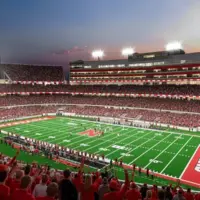
Husker fans can expect a majorly renovated Memorial Stadium in the coming years. The University of Nebraska Board of Regents gave official, unanimous approval for the $600 million “Big Red Rebuild” project at its meeting Friday.
University of Nebraska President Jeffery Gold said the stadium is iconic.
“This project, which we are calling Big Red Rebuild, is ambitious and strategic,” President Gold said Friday. “The Big Red rebuild project is a fan-driven, once-in-a-multi-generational investment that modernizes Memorial Stadium, while preserving its legacy, ensuring that it remains a premier destination for college athletics.”
Regent Jim Scheer of Norfolk said the cosmetics of the project are less expensive than a previously proposed version of the plan, but it also includes $200 million worth of maintenance costs this time around. A $450 million renovation was proposed in 2023 by former athletic director Trev Alberts. Scheer added those repairs improve safety at the century-old stadium that is currently not completely American Disabilities Act compliant.
Student Regent Brock Calamari from the University of Nebraska Medical Center raised concerns about longtime ticketholders potentially losing their seats. The UNMC student, who doesn’t hold a deciding vote on the board but can make motions, said the old-school Nebraska feel will be lost when more-affluent fans donate more money to bump traditional fans through the years.
Calamari motioned that everything be tabled aside from disability compliant changes and other necessary maintenance. His motion wasn’t seconded.
Regent Kathy Wilmot of Beaver City agreed with both Calamari and Scheer’s points. She repairs are need for safety purposes. Wilmot added that farmers, some who are financially struggling in the area she represents in western Nebraska, won’t be able to afford tickets in the future. Regent Barbara Weitz of Omaha and former Husker and NFL fullback and Regent Joel Makovicka said many of the repairs are needed for safety.
Two people testified during the Friday meeting’s public comment period, either opposing the project or suggesting further review. No one spoke in full support of the measure.
Dan Wengert of Omaha is a fifth-generation season ticketholder for Nebraska football. He said the athletic department has the ability to share what people will need to pay to keep their seats but aren’t releasing it.
“Your report says that the funding will come, in part, from $250 million in philanthropic support, nearly one-third of the budget total,” Wengert said. “This euphemism translates to significant ticketholder revenue increases. How will that work? Will South Stadium fans with higher donor points bump out other people?”
Memorial Stadium will go through a reseating process, possibly similar to the process at the Bob Devaney Sports Center. Wengert said the Devaney Center reseating hasn’t gone well, adding that football will involve eight-times as many fans.
Another commenter raised concerns about using university personnel, and in turn taxpayer dollars, to help with construction.
Despite the concerns, regents moved forward with the proposal, and construction on the $600 million project will be full steam ahead following the fall season.
Nebraska Athletics said more than $250 million in donations are expected. The rest of the $350 million will come from private bond sales. The proposal includes the demolition and rebuilding of the South Stadium, upgrades to club, premium and lower bowl seating in the West Stadium and restroom and concourse improvements on the west side.
A makeover to East Stadium is also impending. That part of the rebuild for the 100-plus-year-old stadium is the most costly at more than $250 million. A new “South Plaza” lawn will be added and Nebraska football fans can walk around the entire stadium at the 100 and 200 levels.
Work will continue through the 2027 season, which means seating capacity will shrink from more than 90,000 to 65,000, according to multiple reports. By 2028 when the project is scheduled to be finished, the permanent capacity will settle at 80,000 people.
Several hours after the Friday Regents meeting, Nebraska Athletics Director Troy Dannen, Senior Associate Athletic Director Kortne Gosha, Gold and Regent Paul Kenney addressed questions regarding the project at a press conference in Memorial Stadium.
Dannen said the reseating process will include tiered ticketing prices based on the quality of seats.
“Every seat in the building right now; the worst seat and the best seat is the same ticket price,” he said. Tiers will range from $200 to $400, and legacy seating will go away. “If you want to sit on the 50-yard line, you want access to the clubs, it’s a different price point.”
When asked about the lower capacity for the 2027 season, Dannen said athletics is looking for ways to create opportunities for ticket holders, similar to last year’s Kansas City game.
“There is going to be inconvenience. There’ll be inconvenience that entire season,” he said.
It will take time before fans are able to purchase seats, as construction will determine exactly how many are available in each section and row. When the time comes this fall, Dannen said there will be a sales center housed in the stadium. Part of the purchasing experience will include an AI visualization of what a seat’s view will look like.
“The more that people can put themselves in a position to understand what it’s going to look like, the more we can communicate with them,” Dannen said.